


Microbial Genomics · 2022
Finding the right fit: evaluation of short-read and long-read sequencing approaches to maximize the utility of clinical microbiome data
Gehrig et al.
Test kits
 Core Gut InsightsFor digestive questions$399
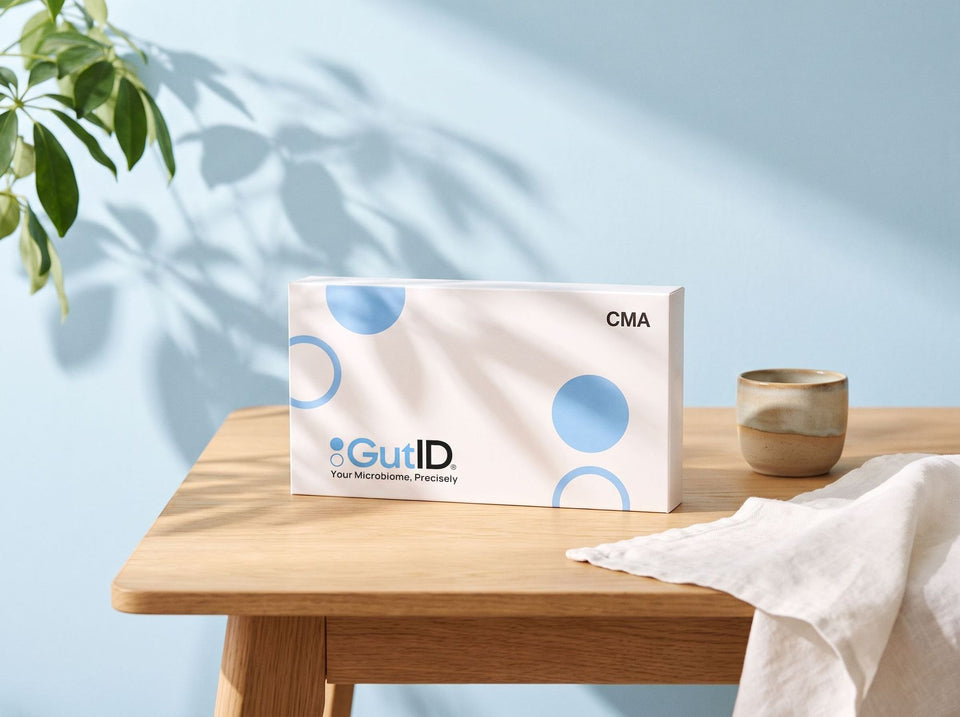 Complete Microbiome AssessmentAdds brain, immune, metabolism and heart axes$599
Help choosing
Also in the shop

 See inside a real reportPage 1: summary, score and Target Plot
Learn
From the Journal
 ConditionsSIBO: breath test or stool test?
 TestingHow often should you retest your gut microbiome?
 ResearchHow much weight the Firmicutes/
 How to read a Target PlotCenter to edge, phylum to species
For your practice
 OverviewWhy practitioners order GutID
 Why GutID is differentqPCR, 16S and shotgun, compared
 Order and recommendStock kits or refer, earn on both
 GutID ProThe full Complete Microbiome Assessment, plus 65 more markers
 EducationCertification and case reviews
 PartnersNetworks, programs, distributors
 Certified Practitioner ProgramThree live modules · 5 CPEUs · 3 BANT CEUs
Start here
 The Clinician GuideInterpreting the GutID Microbiome ReportPublicationsPeer-reviewed papers behind Titan-1Evidence basePapers cited in every reportRequest clinician accessApproved the same day
 Book an intro callPricing, ordering and the portal (opens in a new tab)
The evidence base
Every GutID report is interpreted against published literature. This is that literature in full, with a short note on what each paper covers and what kind of study it is, so you can judge how much weight it carries.
Microbial Genomics · 2022
Finding the right fit: evaluation of short-read and long-read sequencing approaches to maximize the utility of clinical microbiome data
Gehrig et al.
Nutrients · 2020
The Firmicutes/Bacteroidetes ratio: a relevant marker of gut dysbiosis in obese patients?
Magne et al.
Circulation Research · 2021
The gut microbiome in hypertension
Avery et al.
94 papers cited in the back of every report
30+ peer-reviewed publications using the long-read approach behind Titan-1
2023
Mechanism
Ahmad Al Samarraie et al. · International Journal of Molecular Sciences, 24(6), 5420-5420
Reviews the gut microbiome’s proposed role in atherosclerotic cardiovascular disease. Gut–heart axis.
Read the paper (opens in a new tab) ↗2021
Mechanism
Avery et al. · Circulation Research, 128(7), 934-950
Review of the gut microbiome in high blood pressure. Gut–heart axis.
Read the paper (opens in a new tab) ↗2023
Mechanism
Bardacke et al. · Current Developments in Nutrition, 7(10), 101997
Examines longer-term outcomes of the low-FODMAP diet in IBS management.
Read the paper (opens in a new tab) ↗2022
Mechanism
Barlow & Mathur · Journal of the Endocrine Society, 7(2), bvac184
Review of the microbiome in type 2 diabetes. Gut–metabolism axis.
Read the paper (opens in a new tab) ↗2019
Mechanism
Bartolomaeus et al. · Circulation, 139(11), 1407-1421
Experimental study of the short-chain fatty acid propionate in hypertensive cardiovascular damage.
Read the paper (opens in a new tab) ↗2023
Mechanism
Bleibel et al. · Frontiers in Microbiology, 14
Reviews how psychobiotics might act, focusing on bacterial extracellular vesicles. Gut–brain axis.
Read the paper (opens in a new tab) ↗2022
Mechanism
Cantero et al. · Nutrition Research, 104, 29-35
Systematic review of TMAO and probiotic strain specificity, relevant to how TMAO is reported.
Read the paper (opens in a new tab) ↗2016
Mechanism
Dior et al. · Neurogastroenterology and Motility, 28(9), 1330-1340
Studies bile acid metabolism alongside gut bacteria in IBS.
Read the paper (opens in a new tab) ↗2020
Mechanism
Duranti et al. · Scientific Reports, 10
Examines a named organism’s part in GABA production. Underpins how neurotransmitter-related organisms are read.
Read the paper (opens in a new tab) ↗2023
Mechanism
Evans et al. · Ndt Plus, 16(11), 1804-1812
Looks at where dietary TMAO comes from and how it relates to clinical outcomes.
Read the paper (opens in a new tab) ↗2022
Mechanism
Gehrig et al. · Microbial Genomics, 8(3)
Independent comparison of short-read and long-read sequencing for clinical microbiome work. This is the paper the Titan-1 comparison table draws on.
Read the paper (opens in a new tab) ↗2023
Mechanism
Grabrucker et al. · Brain, 146(12)
Transfer study testing whether microbiota from Alzheimer’s patients affect cognition in animals. Gut–brain axis.
Read the paper (opens in a new tab) ↗2022
Mechanism
Hamamah et al. · Biomedicines, 10(2), 436
Reviews the gut–brain axis in dopamine signaling.
Read the paper (opens in a new tab) ↗2014
Mechanism
Hill et al. · Nature Reviews Gastroenterology & Hepatology, 11(8), 506-514
The ISAPP consensus definition of "probiotic". This is the definition the report uses.
Read the paper (opens in a new tab) ↗2022
Mechanism
Hossain et al. · Microorganisms, 10(6), 1168
Reviews B vitamins in gut health, including bacterial synthesis.
Read the paper (opens in a new tab) ↗2021
Mechanism
Koponen et al. · The American Journal of Clinical Nutrition, 114(2), 605-616
Population study relating healthy food choices to gut community profiles.
Read the paper (opens in a new tab) ↗2019
Mechanism
Leite et al. · BMC Microbiology, 19(1)
Methods work on sequencing small intestinal aspirates, relevant to what stool can and cannot show about the small intestine.
Read the paper (opens in a new tab) ↗2019
Mechanism
Li et al. · Neurogastroenterology and Motility, 31(10), e13677
Rat model study of gut bacteria and serotonin metabolism under chronic stress. Gut–brain axis.
Read the paper (opens in a new tab) ↗2023
Mechanism
Li et al. · Journal of Gastrointestinal Surgery, 27(7), 1466-1472
Examines barrier dysfunction and bacterial LPS in colorectal cancer. Background to how barrier and LPS-bearing organisms are reported.
Read the paper (opens in a new tab) ↗2021
Mechanism
Li et al. · Frontiers in Pharmacology, 12
Reviews bacterially produced indole compounds in intestinal and liver disease.
Read the paper (opens in a new tab) ↗2022
Mechanism
Li et al. · CNS Neuroscience & Therapeutics, 28(9), 1359-1372
Systematic review of gut bacterial profiles reported in Parkinson’s disease.
Read the paper (opens in a new tab) ↗2020
Mechanism
Liccardo et al. · Frontiers in Physiology, 11(11)
Reviews a possible two-way link between gum disease and Alzheimer’s, context for oral-origin organisms found in the gut.
Read the paper (opens in a new tab) ↗2020
Mechanism
Liu & Dai · Mediators of Inflammation, 2020, 1-15
Reviews bacterially generated TMAO in relation to vascular inflammation.
Read the paper (opens in a new tab) ↗2020
Mechanism
Magne et al. · Nutrients, 12(5), 1474
Questions how much weight the F/B ratio should carry as a dysbiosis marker. Directly relevant to how the report presents that ratio.
Read the paper (opens in a new tab) ↗2019
Mechanism
Maini Rekdal et al. · Science, 364(6445), eaau6323
Identifies a gut bacterial pathway that metabolizes levodopa, a worked example of bacteria altering a drug.
Read the paper (opens in a new tab) ↗2013
Mechanism
Martín et al. · Microbial Cell Factories, 12(1), 71
Reviews commensal and probiotic organisms in health, focused on IBD.
Read the paper (opens in a new tab) ↗2023
Mechanism
Mazur et al. · Healthcare, 11(5), 766
Literature review covering both gut and skin communities in atopic dermatitis. Gut–immune axis and skin.
Read the paper (opens in a new tab) ↗2017
Mechanism
Mittal et al. · Journal of Cellular Physiology, 232(9), 2359-2372
Reviews neurotransmitters as the mediators of the gut–brain axis.
Read the paper (opens in a new tab) ↗2022
Mechanism
Monteagudo-Mera et al. · Journal of Applied Microbiology, 134(2)
Tests GABA production across commercially available probiotic strains, relevant when a specific supplement is being considered.
Read the paper (opens in a new tab) ↗2021
Mechanism
Naomi et al. · Nutrients, 14(1), 20
Systematic review of probiotic studies in Alzheimer’s disease.
Read the paper (opens in a new tab) ↗2023
Mechanism
Nikolaki et al. · Microorganisms, 11(10), 2387-2387
Reviews the low-FODMAP diet in IBS including its drawbacks, useful when a report suggests it.
Read the paper (opens in a new tab) ↗2023
Mechanism
O’Donnell et al. · Nature Reviews Nephrology, 19
Review of the gut microbiome in hypertension. Gut–heart axis.
Read the paper (opens in a new tab) ↗2023
Mechanism
Obrenovich et al. · Life, 13(1), 41
Reviews host–bacteria co-metabolism of natural products along the gut–brain axis in aging.
Read the paper (opens in a new tab) ↗2021
Mechanism
Onaolapo & Onaolapo · World Journal of Psychiatry, 11(7), 297-315
Reviews glutamate across gut and brain in depression.
Read the paper (opens in a new tab) ↗2022
Mechanism
Pferschy-Wenzig et al. · Nutrients, 14(10), 2111
Systematic review of medicinal plants, the gut community and mental health.
Read the paper (opens in a new tab) ↗2020
Mechanism
Pimentel et al. · The American Journal of Gastroenterology, 115(2), 165-178
American College of Gastroenterology clinical guideline on small intestinal bacterial overgrowth. A guideline, not a study.
Read the paper (opens in a new tab) ↗2022
Mechanism
Qiu et al. · Frontiers in Cellular and Infection Microbiology, 12, 733992
Review of the gut community in inflammatory bowel disease.
Read the paper (opens in a new tab) ↗2021
Mechanism
Romano et al. · npj Parkinson’s Disease, 7(1)
Meta-analysis pooling gut microbiome datasets in Parkinson’s disease.
Read the paper (opens in a new tab) ↗2022
Mechanism
Sánchez-Pérez et al. · Frontiers in Nutrition, 9
Pilot study of a low-histamine diet and histamine-secreting gut bacteria. Small, and described as a pilot.
Read the paper (opens in a new tab) ↗2022
Mechanism
Sarmiento-Andrade et al. · Frontiers in Nutrition, 9
Review of the gut community in obesity. Gut–metabolism axis.
Read the paper (opens in a new tab) ↗2022
Mechanism
Satish Kumar et al. · Cureus, 14(4)
Reviews the therapeutic role studied for probiotics in IBS.
Read the paper (opens in a new tab) ↗2023
Mechanism
Singh et al. · Microorganisms, 11(7), 1772
Reviews the genus Desulfovibrio and the case for and against treating it as harmful.
Read the paper (opens in a new tab) ↗2018
Mechanism
Strandwitz · Brain Research, 1693(Pt B), 128-133
Reviews how gut bacteria produce and modulate neurotransmitters. Foundational for the gut–brain section.
Read the paper (opens in a new tab) ↗2022
Mechanism
Varesi et al. · Nutrients, 14(3), 668
Reviews the gut community in Alzheimer’s disease across diagnosis and treatment.
Read the paper (opens in a new tab) ↗2018
Mechanism
Vijayvargiya et al. · Clinical Gastroenterology and Hepatology, 16(4), 522-527
Identifies a bile-acid-deficient subgroup within constipation-predominant IBS.
Read the paper (opens in a new tab) ↗2022
Mechanism
Wallen et al. · Nature Communications, 13(1)
Large metagenomic study of the gut microbiome in Parkinson’s disease.
Read the paper (opens in a new tab) ↗2021
Mechanism
Yu et al. · Clinical and Translational Medicine, 11(12)
Experimental study of two named strains in non-alcoholic fatty liver disease.
Read the paper (opens in a new tab) ↗2022
Mechanism
Zhai et al. · Oxidative Medicine and Cellular Longevity, 2022, 1-13
Reviews probiotics in atherosclerosis prevention and treatment.
Read the paper (opens in a new tab) ↗2023
Mechanism
Zhang et al. · Frontiers in Microbiology, 14
Experimental study of vitamin D in non-alcoholic fatty liver disease, via the gut community.
Read the paper (opens in a new tab) ↗2021
Diet
Attaye et al. · Nutrients, 14(1), 191
Reviews the gut microbiota’s role in how ketogenic diets act.
Read the paper (opens in a new tab) ↗2021
Diet
Beane et al. · Applied Biological Chemistry, 64(1), 36
Broad review of fibers, micronutrients and phytonutrients as inputs to the gut community.
Read the paper (opens in a new tab) ↗2018
Diet
Carlson et al. · Current Developments in Nutrition, 2(3)
Covers what counts as a prebiotic fiber, where it is found, and the health effects studied.
Read the paper (opens in a new tab) ↗2023
Diet
Conz et al. · Nutrients, 15(8), 1869
Reviews the evidence on non-nutritive sweeteners and gut bacterial composition.
Read the paper (opens in a new tab) ↗2020
Diet
Creedon et al. · Nutrients, 12(8), 2347
Systematic review and meta-analysis of randomized trials of nut intake, covering composition, gut function and symptoms.
Read the paper (opens in a new tab) ↗2021
Diet
Cronin et al. · Nutrients, 13(5), 1655
Review of how dietary fiber acts on gut community composition.
Read the paper (opens in a new tab) ↗2019
Diet
Dimidi et al. · Nutrients, 11(8), 1806
Defines what fermented foods are and reviews their studied effects on the gut and GI health.
Read the paper (opens in a new tab) ↗2021
Diet
Dobranowski & Stintzi · Gut Microbes, 13(1), 1926842
Reviews resistant starch as a targeted way to shift the gut community.
Read the paper (opens in a new tab) ↗2021
Diet
García-Montero et al. · Nutrients, 13(2), 699
Compares Western and Mediterranean dietary patterns at the point where the gut community meets the immune system.
Read the paper (opens in a new tab) ↗2022
Diet
Hanes et al. · Frontiers in Nutrition, 9
Randomized clinical trial of a resistant starch blend, measuring both GI and microbiome outcomes.
Read the paper (opens in a new tab) ↗2022
Diet
Kok et al. · Annual Review of Food Science and Technology, 14, 157-182
Reviews why fiber interventions work differently in different people, and what predicts the response.
Read the paper (opens in a new tab) ↗2019
Diet
Kumar Singh et al. · Nutrients, 11(9), 2216
Reviews dietary polyphenols and the gut community, including the practical problem of delivery.
Read the paper (opens in a new tab) ↗2022
Diet
Leeuwendaal et al. · Nutrients, 14(7), 1527
Review of fermented foods in relation to the gut microbiome and health.
Read the paper (opens in a new tab) ↗2020
Diet
Machate et al. · International Journal of Molecular Sciences, 21(11), 4093
Reviews dietary fat composition in relation to the gut community and metabolic dysbiosis.
Read the paper (opens in a new tab) ↗2021
Diet
Muralidharan et al. · The American Journal of Clinical Nutrition, 114(3), 1148-1158
A one-year randomized lifestyle intervention comparing two Mediterranean-diet arms, with gut composition as an outcome.
Read the paper (opens in a new tab) ↗2023
Diet
Newsome et al. · Seminars in Immunology, 67, 101756
Reviews the Western dietary pattern in relation to the microbiome and cancer development.
Read the paper (opens in a new tab) ↗2021
Diet
Pham et al. · Nutrition Research, 95, 35-53
Reviews the two-way relationship between vitamins and the gut community in humans.
Read the paper (opens in a new tab) ↗2023
Diet
Ravindra Pal Singh & Bhardwaj · Frontiers in Nutrition, 10, 1143682
Reviews β-glucans as a dietary input to the gut community and immune function.
Read the paper (opens in a new tab) ↗2022
Diet
Richardson & Frese · Frontiers in Nutrition, 9, 988144
Reviews non-nutritive sweeteners across both microbiome and host physiology.
Read the paper (opens in a new tab) ↗2020
Diet
Rusu et al. · Nutrients, 12(7), 1993
Literature review of iron supplementation, the gut community, and probiotic intake in iron deficiency.
Read the paper (opens in a new tab) ↗2020
Diet
Singh et al. · Scientific Reports, 10, 21641
Studies vitamin D supplementation as a way of altering the gut community in healthy adults.
Read the paper (opens in a new tab) ↗2019
Diet
Smiljanec & Lennon · American Journal of Physiology. Heart and Circulatory Physiology, 317(6), H1173–H1182
Reviews dietary sodium, blood pressure and the gut community as a possible link between them.
Read the paper (opens in a new tab) ↗2018
Diet
Sugizaki & Naves · Nutrients, 10(11), 1645
Reviews nuts and edible seeds as potential prebiotics, and their relationship to obesity.
Read the paper (opens in a new tab) ↗2019
Diet
Tomova et al. · Frontiers in Nutrition, 6(47)
Reviews how vegetarian and vegan dietary patterns relate to gut community composition.
Read the paper (opens in a new tab) ↗2022
Diet
Wang et al. · Antioxidants, 11(6), 1212
Reviews dietary polyphenols, their interaction with gut bacteria, and the health effects studied.
Read the paper (opens in a new tab) ↗2021
Diet
Wastyk et al. · Cell, 184(16), 4137–4153
A human trial comparing two gut-targeted diets, high fiber and high fermented food, with immune measures as an outcome.
Read the paper (opens in a new tab) ↗2023
Diet
Zugravu et al. · Nutrients, 15(4), 844
Reviews beer and its non-alcoholic components in relation to the gut community.
Read the paper (opens in a new tab) ↗2019
Drugs
Bruno et al. · World Journal of Gastroenterology, 25(22), 2706-2719
Reviews what is established, and what is still unresolved, about proton pump inhibitors and gut bacterial composition.
Read the paper (opens in a new tab) ↗2017
Drugs
Caparrós-Martín et al. · Microbiome, 5(1), 1-15
A mouse study investigating a PXR-dependent route by which statin therapy shifts the gut community.
Read the paper (opens in a new tab) ↗2022
Drugs
Cheng et al. · Journal of Pharmaceutical Analysis, 12(4), 541-555
Examines how berberine and gut bacteria act on each other, as groundwork for understanding how the compound works.
Read the paper (opens in a new tab) ↗2020
Drugs
Dias et al. · Pharmacology Research & Perspectives, 8(3), e00601
Systematic review of studies comparing gut bacterial composition in people taking statins.
Read the paper (opens in a new tab) ↗2022
Drugs
Dou et al. · Nutrients, 14(16), 3298
Systematic review and meta-analysis of human trials of fructooligosaccharide (FOS) supplementation.
Read the paper (opens in a new tab) ↗2022
Drugs
Ermolenko et al. · International Journal of Molecular Sciences, 23(12), 6837
Rat study of metformin’s effect on the intestinal microbiota in metabolic syndrome.
Read the paper (opens in a new tab) ↗2020
Drugs
Li et al. · Microbiome, 8(1), 1-16
Describes an assay for testing how one individual’s microbiome responds to particular drugs.
Read the paper (opens in a new tab) ↗2023
Drugs
Mahalak et al. · Frontiers in Nutrition, 9, 3212
In vitro work examining whether FOS affects the gut community differently across age groups.
Read the paper (opens in a new tab) ↗2021
Drugs
Nathwani et al. · EMJ, 6(3), 94-99
Summary of the evidence for rifaximin, including uses beyond its licensed indications.
Read the paper (opens in a new tab) ↗2019
Drugs
Ng et al. · Anaerobe, 55, 35-39
Systematic review of rifaximin used against Clostridium difficile infection.
Read the paper (opens in a new tab) ↗2010
Drugs
Pélissier et al. · FEMS Microbiology Ecology, 73(3), 601-610
Rat study of how metronidazole affects gut bacteria and the thickness of the protective mucus layer.
Read the paper (opens in a new tab) ↗2017
Drugs
Ponziani et al. · World Journal of Gastroenterology, 23(25), 4491–4499
Argues rifaximin should be understood as modulating the gut community rather than suppressing it.
Read the paper (opens in a new tab) ↗2021
Drugs
Silamiķele et al. · Frontiers in Endocrinology, 12, 626359
Mouse study of metformin and gut composition in type 2 diabetes, analyzed separately by sex.
Read the paper (opens in a new tab) ↗2021
Drugs
Sjöstedt et al. · Frontiers in Psychiatry, 12, 682868
Reviews how SSRIs and the gut microbiome interact, and what that may mean for treatment response and side effects.
Read the paper (opens in a new tab) ↗2020
Drugs
Vich Vila et al. · Nature Communications, 11(1), 362
Population-scale study relating widely used medications to gut composition and metabolic function.
Read the paper (opens in a new tab) ↗2022
Drugs
Wang et al. · Frontiers in Nutrition, 9, 848400
Reviews resveratrol in intestinal health, with a focus on the gut barrier.
Read the paper (opens in a new tab) ↗2021
Drugs
Zhang et al. · Frontiers in Cellular and Infection Microbiology, 10, 588517
Reviews the reported effects of berberine on gastrointestinal bacteria.
Read the paper (opens in a new tab) ↗2020
Drugs
Zhang & Hu · Diabetes, Metabolic Syndrome and Obesity: Targets and Therapy, 13, 5003–5014
Reviews metformin and the gut microbiome in obesity and type 2 diabetes.
Read the paper (opens in a new tab) ↗No papers match that search. Try an organism, a system or an author’s surname.
94 papers.
These are independent, third-party publications cited in the back of the GutID report. They are not GutID research: work using the long-read approach behind Titan-1 is listed on the publications page. Each note describes what a paper covers and what kind of study it is; it is not a summary of its findings.
The platform
Separate from the report’s reference list: the published work using the long-read approach behind Titan-1, including how it compares with 16S-only and shotgun methods.