


On this page
Doctor's Data's Comprehensive Stool Analysis + Parasitology (CSAP) and Diagnostic Solutions Laboratory's GI-MAP® are both practitioner-ordered stool panels, but they measure the gut in different ways. The CSAP combines bacterial and yeast culture with MALDI-TOF identification, microscopy for parasites, a multiplex PCR pathogen panel and a broad stool chemistry panel, collected over one to three days. GI-MAP uses quantitative PCR (qPCR) on a single sample to report DNA-based amounts of pathogens, H. pylori, commensal and opportunistic bacteria, fungi and parasites, alongside intestinal health markers.
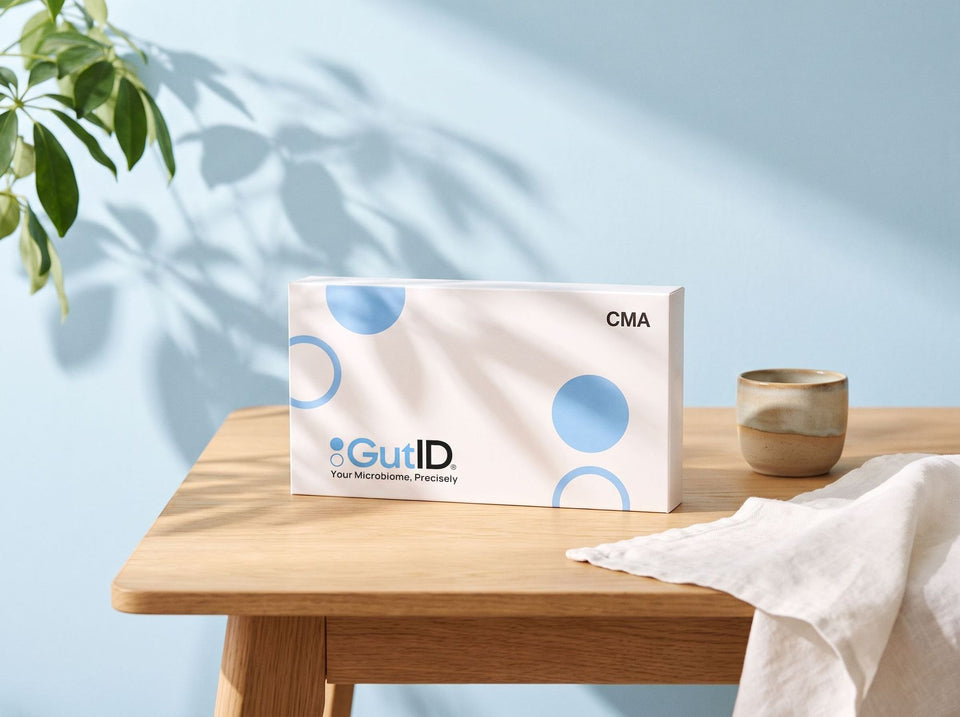
GutID Pro is built for a third view: the entire bacterial ecosystem, read by sequencing rather than culture or a target list. Titan-1™ long-read sequencing captures one continuous ~2,500-base stretch of each bacterium's ribosomal DNA, a method with 30+ peer-reviewed publications behind it, and the same kit adds 65 targeted markers, from enteric bacteria, viruses, parasites and Candida to calprotectin, elastase and H. pylori antigen.
This comparison is for clinicians choosing between these panels or reading a report a patient brings in, using each lab's own pages, sample reports and collection instructions at time of writing (October 2026).
Doctor's Data CSAP vs. GI-MAP at a glance
| Attribute | Doctor's Data CSAP | GI-MAP® (DSL) | GutID Pro |
|---|---|---|---|
| Laboratory | Doctor's Data, Inc., St. Charles, Illinois | Diagnostic Solutions Laboratory | A CLIA laboratory in the United States |
| Who orders it | A healthcare provider; Doctor's Data requires provider ordering for all tests | A healthcare practitioner; not available for ordering in New York State | An approved clinician in the US, for patients 18 and over; not available in New York State |
| Method | Culture with MALDI-TOF identification, microscopy, multiplex PCR, stool chemistries, susceptibility testing | qPCR for organisms; ELISA for intestinal health markers | Titan-1™ long-read sequencing of one ~2,500-base fragment (full 16S, ITS, start of 23S), plus included lab panels on a second tube |
| What it measures | Cultured bacteria and yeast, parasites by microscopy, GI pathogens by PCR, digestion, inflammation and immune markers, short-chain fatty acids | Pathogens, H. pylori with virulence factors and resistance genes, commensal and opportunistic bacteria, fungi/yeast, viruses, parasites, intestinal health markers | The entire bacterial ecosystem to species level; enteric bacteria, viruses, parasites and Candida; C. difficile toxin; calprotectin, elastase-1, occult blood, H. pylori antigen; 31 commensal and dysbiotic markers |
| Sample | Stool over one, two or three days (practitioner's choice); refrigerated and frozen vials shipped with an ice pack | Single stool sample shipped at ambient temperature | One stool collection, two tubes |
| Results format | Culture graded NG to 4+; PCR positive or negative; microscopy detected or not detected; chemistries against reference ranges | Numeric quantities per gram of stool, against reference ranges | Species with relative abundance; 31 markers with their own reference ranges; H. pylori detected or not detected |
| Results time (lab estimate) | 6 to 8 days | 7–10 business days | 3–4 weeks after the lab receives the sample |
| Price and billing | No public list price; shown after account sign-in. Out-of-network with all insurers; bills insurance as a courtesy | No price on DSL's test page; DSL files claims to insurance and Medicare | No public price; approved clinicians sign in for pricing |
| Best suited to | Workups that call for culture, susceptibility results, microscopy and a broad chemistry panel | Workups that call for a single-sample, quantitative DNA panel with H. pylori detail | Seeing the entire bacterial ecosystem, with 65 targeted markers from the same collection |
How the Doctor's Data CSAP works
Doctor's Data, Inc. is a specialty clinical laboratory in St. Charles, Illinois, serving practitioners since 1972. It describes the CSAP as a non-invasive diagnostic assessment of beneficial and imbalanced commensal bacteria, pathogenic bacteria, yeast and parasites. Each component uses its own method:
- Culture. Bacteriology and yeast cultures, identified by MALDI-TOF mass spectrometry and conventional biochemicals. Growth is graded from NG (no growth) to 4+ and sorted into expected/beneficial bacteria, commensal (imbalanced) flora and dysbiotic flora.
- Susceptibility testing. Appropriate cultured bacterial and fungal isolates are tested against prescriptive and natural agents by disk diffusion, at no additional charge.
- Microscopy. Concentrate and trichrome preparations for protozoa, nematodes, cestodes and trematodes. The sample report notes that this parasitology is not designed to detect Cyclospora cayetanensis or microsporidia.
- Multiplex PCR. A panel for common viral, bacterial and parasitic pathogens, including norovirus, rotavirus, C. difficile toxin A/B, Shiga toxin-producing E. coli, Salmonella, Shigella, Giardia and Cryptosporidium.
- Stool chemistries. Digestion and absorption (elastase, fat stain, carbohydrates), inflammation (calprotectin, lactoferrin, lysozyme), secretory IgA, short-chain fatty acids, pH and occult blood.
The practitioner chooses one, two or three collection days; for multi-day tests, each specimen must come from a separate day. The instructions list items to pause beforehand, such as antibiotics, antifungals, probiotics and proton pump inhibitors for two weeks, and tell patients to consult their physician before stopping any medication.
Doctor's Data also offers the GI360™ profile, which adds PCR measurement of more than 45 microbiome targets and a Dysbiosis Index scored 1 to 5; our GI-MAP vs. GI360 comparison covers it.
Mosaic Diagnostics (formerly The Great Plains Laboratory) also lists a Comprehensive Stool Analysis with Parasitology; its sample report credits Doctor's Data Laboratories with developing the test, and Doctor's Data, Inc. still offers the CSAP directly at time of writing.
How GI-MAP works
Diagnostic Solutions Laboratory (DSL) describes GI-MAP® (GI Microbial Assay Plus) as a comprehensive stool test that uses quantitative PCR to detect organisms by targeting their DNA. DSL's 2025 interpretive guide groups the report into pathogens; H. pylori and virulence factors; commensal/keystone bacteria; opportunistic bacteria; fungi/yeast; viruses; parasites, including worms; and intestinal health markers. The intestinal health markers (pancreatic elastase-1, calprotectin, secretory IgA, anti-gliadin sIgA and eosinophil activation protein) are measured by ELISA, and DSL's product brief adds a fecal immunochemical test for occult blood. Add-ons include zonulin, a fecal gluten peptide, a universal antibiotic resistance gene panel and StoolOMX™, which measures 25 bile acids and nine short- and branched-chain fatty acids. Our guide to what a GI-MAP tests for walks through each section.
Key differences for clinicians
Culture and microscopy vs. DNA quantification
The CSAP reports organisms that grow in culture and parasites seen under the microscope, then adds a PCR panel for common pathogens. Because isolates are grown, the lab can test them against prescriptive and natural agents. GI-MAP quantifies DNA targets from a defined panel, which yields a number for every target whether or not the organism is grown, and adds gene-level results such as H. pylori virulence factors and resistance genes.
Chemistry panels and add-ons
Both base panels include elastase, calprotectin and secretory IgA. The CSAP adds short-chain fatty acids, lactoferrin, lysozyme, fat stain and pH; GI-MAP adds anti-gliadin sIgA and eosinophil activation protein, with short-chain fatty acids and bile acids available through StoolOMX™. Doctor's Data add-ons include H. pylori antigen, zonulin family protein and beta-glucuronidase. For one marker both panels share, see our explainer on fecal calprotectin.
Cost and billing
Neither lab lists a price on its test page. Doctor's Data shows pricing after account sign-in; it describes itself as out-of-network with all insurance companies, bills insurance as a courtesy without guaranteeing coverage, and does not accept specimens from Medicaid patients. DSL states that it files insurance and Medicare claims.
When the Doctor's Data CSAP is the right choice
- You want culture-based identification of bacteria and yeast, with susceptibility results for cultured isolates against prescriptive and natural agents.
- You want microscopic parasitology, with the option of up to three days of collection.
- You want short-chain fatty acids, lactoferrin, lysozyme and digestion markers in the same base panel as the microbiology.
When GI-MAP is the right choice
- You want quantitative, DNA-based results for a defined panel of pathogens, commensals, opportunists, fungi and parasites from one sample.
- H. pylori virulence factors and antibiotic resistance genes are relevant to the case.
- A single room-temperature collection suits the patient, and you want the lab to file insurance or Medicare claims (outside New York State).
When GutID Pro is the better choice
- The question is the whole bacterial community: its diversity, balance and species-level makeup, not only the organisms that grow in culture or sit on a qPCR list.
- The workup also calls for enteric bacteria, viruses, parasites, Candida, C. difficile toxin, calprotectin, elastase-1 and H. pylori antigen, all in the same kit as that community view.
- A single collection works better for the patient than up to three days of specimens, and you plan to retest to track how the community shifts.
Whichever test you choose, a patient with red-flag symptoms (blood in the stool, unexplained weight loss, fever, severe or persistent diarrhea) or a suspected acute infection should see a clinician for diagnostic testing.
Why GutID sees more
Culture reports what grows on the lab's media, and qPCR reports the DNA targets a panel was built to find. Titan-1™ sequences the bacterial community directly. Its patented amplicon spans the full 16S gene, the internal transcribed spacer (ITS) and the start of 23S as one continuous ~2,500-base fragment, and each molecule is read repeatedly to build a consensus sequence. A typical short-read 16S test reads a few hundred bases (about 250 for V4, 460 for V3–V4), so Titan-1 reads 5–10 times more of each bacterium's ribosomal DNA.
GutID's own classifier works from the whole long read rather than matching short markers to a fixed database, so organisms are separated and quantified even when no species name exists, and the report delivers species-level identification with relative abundance from strain-level data. Comparing short-read 16S with a long-read 16S–ITS–23S amplicon, Gehrig et al. (Microbial Genomics, 2022) found that only the long read provided strain-level community resolution and insight into novel taxa, and 30+ peer-reviewed publications use the approach behind Titan-1.
With GutID Pro, that ecosystem read arrives with 65 more markers. The patient fills two tubes from one stool sample, and a CLIA laboratory runs the included panels on the second: enteric bacteria (twelve), enteric viruses (six), parasites (six), Candida species (six), C. difficile toxin by NAAT, quantitative calprotectin and pancreatic elastase-1, fecal occult blood and H. pylori stool antigen. Thirty-one commensal and dysbiotic markers with their own reference ranges share the report, back in 3–4 weeks. Request a clinician account or see the sample report.
Frequently asked questions
What is the difference between the Doctor's Data stool test and GI-MAP?
The CSAP combines culture, microscopy, a PCR pathogen panel and stool chemistries over one to three collection days, and tests cultured isolates for susceptibility. GI-MAP uses qPCR on one sample to quantify DNA targets, including commensal bacteria and H. pylori virulence and resistance genes.
What does the Doctor's Data Comprehensive Stool Analysis and Parasitology test for?
Bacteria and yeast by culture, parasites by microscopy, common GI pathogens by multiplex PCR, and stool chemistries covering digestion, inflammation, secretory IgA, short-chain fatty acids, pH and occult blood.
How much does the Doctor's Data stool test cost?
Doctor's Data does not publish a list price on its CSAP page at time of writing; practitioners see pricing after signing in, and patients owe any part of the list price their insurance does not cover. For the other panel, see our GI-MAP cost guide.
How do you read Doctor's Data stool test results?
Start with the culture section, where growth is graded NG to 4+ (Doctor's Data notes that healthy levels of each beneficial bacterium read 2+ to 4+) and grouped as expected/beneficial, commensal (imbalanced) or dysbiotic. Then review PCR and microscopy findings, chemistries against their reference ranges, and susceptibility tables for any cultured isolates, in the context of the patient's history.
Is GutID better than the Doctor's Data stool test or GI-MAP?
For seeing the entire bacterial ecosystem, yes. Culture grades what grows and GI-MAP measures a set list of DNA targets; Titan-1 sequences the community itself, so it can identify organisms no fixed panel includes, and it reads 5–10 times more ribosomal DNA per bacterium than a short-read 16S test; its long-read approach is documented in 30+ peer-reviewed publications. Pro's 65 targeted markers come from the same collection. For susceptibility testing or H. pylori virulence genes, see the sections above.
What does GutID Pro add?
Pro is the Complete Microbiome Assessment, with its gut-brain, gut-immune, gut-metabolism and gut-heart axes, plus 65 markers: 34 from included lab panels (a 30-marker GI panel of enteric bacteria, viruses, parasites and Candida, with C. difficile toxin NAAT; calprotectin; elastase-1; occult blood; H. pylori antigen) and 31 commensal and dysbiotic markers. Approved US clinicians order it for patients 18 and over, outside New York State, so patients should ask their clinician.
Sources
- Comprehensive Stool Analysis + Parasitology (CSAP) — Doctor's Data, Inc. (accessed October 30, 2026)
- CSAP sample report (PDF) — Doctor's Data, Inc. (accessed October 30, 2026)
- GI360 or CSAP collection instructions (PDF) — Doctor's Data, Inc. (accessed October 30, 2026)
- GI360 stool profile — Doctor's Data, Inc. (accessed October 30, 2026)
- Home page — Doctor's Data, Inc. (accessed October 30, 2026)
- Frequently asked questions — Doctor's Data, Inc. (accessed October 30, 2026)
- Billing policies — Doctor's Data, Inc. (accessed October 30, 2026)
- Comprehensive Stool Analysis with Parasitology — Mosaic Diagnostics (accessed October 30, 2026)
- Comprehensive Stool Analysis sample report (PDF) — Mosaic Diagnostics (accessed October 30, 2026)
- The Great Plains Laboratory is now Mosaic Diagnostics — Mosaic Diagnostics (accessed October 30, 2026)
- GI-MAP — Diagnostic Solutions Laboratory (accessed October 30, 2026)
- GI-MAP product brief (PDF) — Diagnostic Solutions Laboratory (accessed October 30, 2026)
- GI-MAP interpretive guide, 2025 edition (PDF) — Diagnostic Solutions Laboratory (accessed October 30, 2026)
- Finding the right fit: evaluation of short-read and long-read sequencing approaches to maximize the utility of clinical microbiome data (Gehrig et al., 2022) — Microbial Genomics (accessed October 30, 2026)
GutID provides wellness and educational insights and is not a diagnostic test. Doctor's Data, GI360™, GI-MAP®, StoolOMX™ and Mosaic Diagnostics are trademarks of their respective owners. GutID is not affiliated with Doctor's Data, Inc., Diagnostic Solutions Laboratory or Mosaic Diagnostics.
This article is for education and is not medical advice. GutID provides wellness and educational insights and is not a diagnostic test.
