
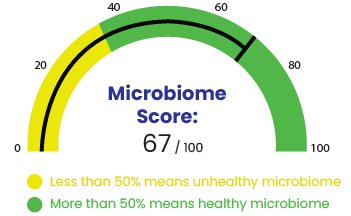

A gut microbiome test tells you which bacteria (and depending on the test, sometimes fungi, viruses, parasites and digestive markers) are a part of your ecosystem, how abundant they are, and how they may be affecting your health. Depending on the test, your report may include a microbiome diversity score, identification of beneficial bacteria and potential pathogens, inflammation-associated patterns, condition-associated biomarkers (such as IBS, SIBO, or IBD indicators), gut barrier function indicators, and personalized food, supplement, and lifestyle recommendations. The depth and usefulness of these results vary significantly depending on the sequencing technology used. Advanced tests like GutID use patented Titan-1 multi-region long-read ribosomal sequencing to deliver a high-resolution, accurate picture of your gut bacterial ecosystem — providing the clinically actionable foundation for personalized recommendations.
TLDR
-
A microbiome test identifies the organisms in your gut, their relative abundance, and what their patterns may mean for your health.
-
Reports can include diversity scores, pathogen detection, inflammation-associated patterns, condition indicators, and personalized recommendations.
-
The level of detail depends on the technology: single-region 16S sequencing identifies bacteria at the family or genus level; short-read shotgun metagenomics reaches species level for more organisms but introduces other trade-offs; multi-region long-read ribosomal sequencing (like GutID's Titan-1) provides high-resolution bacterial ecosystem profiling with no host DNA interference.
-
High taxonomic resolution matters because closely related bacteria can have very different ecological roles, and accurate ecosystem characterization is the foundation for any meaningful interpretation or recommendation.
-
The most useful tests provide personalized, actionable guidance grounded in an accurate ecosystem profile, not just a list of bacteria.
What Does a Microbiome Test Actually Tell You? A Complete Guide
Your gut is home to trillions of microorganisms — mainly bacteria — that influence everything from digestion and immunity to mood and metabolism. A gut microbiome test analyzes a stool sample to tell you what is living in your digestive tract and what it may mean for your health.
But "what a microbiome test tells you" depends heavily on which test you take. Some give you a basic list of bacterial families. Others provide a high-resolution profile of your gut ecosystem, condition-specific biomarkers, and personalized recommendations grounded in your unique microbial composition. The difference is the technology behind the test.
This guide walks through exactly what microbiome test results include, what the key metrics mean, and how to get the most useful information from your report. It is written for health-conscious consumers, people managing digestive conditions like IBS or IBD, functional medicine patients, clinicians, and anyone curious about what is really going on inside their gut.
What Does a Gut Microbiome Test Tell You?
A gut microbiome test analyzes the DNA of microorganisms in your stool sample to reveal:
-
Which bacteria are present in your gut and their relative abundance
-
Microbiome diversity (how many different organisms you have and how evenly they are distributed)
-
Beneficial bacteria levels (including keystone species like Faecalibacterium prausnitzii and Akkermansia muciniphila)
-
Potential pathogens (harmful bacteria that may be present at elevated levels)
-
Condition-associated biomarkers (microbial signatures linked to IBS, IBD, SIBO, inflammation, and other conditions)
-
Gut barrier function indicators
-
Personalized recommendations (specific food, supplement, and lifestyle guidance grounded in your ecosystem profile)
Some tests also report on additional domains beyond bacteria (such as fungi, viruses, archaea, or parasites) or include direct functional gene measurements like resistome profiling — capabilities that depend on the specific sequencing approach used. Not all tests report on all of these. The depth and accuracy of your results depend on the sequencing technology, the bioinformatics pipeline, and how the company translates raw data into actionable insights.
Understanding Your Microbiome Test Report: Section by Section
Here is what each major component of a microbiome test report tells you and why it matters.
1. Bacterial Composition and Abundance
This is the foundation of every microbiome report. Your test identifies the bacteria in your sample and how much of each is present, expressed as relative abundance (a percentage of your total bacterial community).
Why it matters: Research published in Nature Reviews Gastroenterology & Hepatology confirms that the gut microbiome plays a central role in digesting nutrients and influencing multiple organ systems. Knowing which bacteria dominate your gut, and which are missing or underrepresented, is the starting point for understanding your gut health.
The level of detail here varies by test. Single-region 16S sequencing typically identifies bacteria only at the family or genus level (e.g., Bacteroides). Short-read shotgun metagenomics can reach species level for many organisms (e.g., Bacteroides fragilis) but assembles short fragments computationally, which can introduce errors for closely related taxa. GutID's Titan-1 multi-region long-read ribosomal sequencing provides high taxonomic resolution including reliable differentiation of closely related species and strain-level discrimination — important because closely related bacteria can have very different ecological roles. For example, some strains of Escherichia coli are harmless commensals while others produce toxins. Without the resolution to tell them apart, the picture of your ecosystem can be misleading.
2. Microbiome Diversity Score
Diversity is one of the most studied markers of gut health. Your report may include measures of:
-
Richness: How many different organisms are present
-
Evenness: How evenly distributed those organisms are (a gut dominated by one species is less "even" than one where many species share the space)
-
Overall diversity: Often expressed as a single score combining richness and evenness
Why it matters: Research consistently links higher microbiome diversity to better health outcomes. A 2022 review in Gut (BMJ) outlined the mechanistic connections between diverse microbial communities and functions like immune regulation, barrier integrity, and metabolic health. Low diversity has been associated with conditions including inflammatory bowel disease, obesity, and metabolic syndrome.
GutID reports include diversity, richness, evenness, and resilience scores as part of a comprehensive microbiome health score (0 to 100), giving you a clear, quantitative snapshot of your overall gut ecosystem.
3. Beneficial Bacteria
Your report should identify and quantify the beneficial bacteria in your gut. These are the organisms that contribute positively to your health. Key beneficial bacteria that comprehensive tests look for include:
-
Faecalibacterium prausnitzii: One of the most important butyrate-producing organisms in the human gut. Butyrate is a short-chain fatty acid that feeds the cells lining your colon and supports anti-inflammatory processes.
-
Akkermansia muciniphila: Associated with healthy gut barrier function and metabolic health. It helps maintain the protective mucus layer in the intestines.
-
Bifidobacterium species: Important for immune function and digestion.
-
Lactobacillus species: Common probiotic-associated bacteria linked to digestive comfort and immune support.
Why it matters: Knowing whether your beneficial bacteria are present at healthy levels helps guide targeted interventions. If your butyrate-producing bacteria are low, for example, specific dietary changes (like increasing fiber intake) can help restore them. The International Scientific Association for Probiotics and Prebiotics (ISAPP) emphasizes that probiotic and prebiotic interventions are most effective when guided by knowledge of your existing microbial composition. Its important to look at the beneficial bacteria through a critical lens, high levels of good bacteria can negatively impact the ecosystem. Looking at relative abundance can help guide clinical decisions vs. Just assessing if a strain or species is high or low.
4. Pathogen Detection
Comprehensive tests screen for potentially harmful bacteria. These are organisms that, when present at elevated levels, may contribute to symptoms or increase health risks.
Why it matters: Not all pathogens cause immediate illness. Some can exist at low levels without symptoms but may become problematic if your microbiome becomes imbalanced. High-resolution detection — including the ability to identify low-abundance organisms — gives you and your healthcare provider the information needed to monitor and intervene if necessary.
5. Condition-Associated Biomarkers
Some tests go beyond listing bacteria and report on microbial signatures associated with specific health conditions. For example:
-
IBS (Irritable Bowel Syndrome): Certain microbial patterns have been associated with IBS symptoms, including changes in the Firmicutes-to-Bacteroidetes ratio and reduced short-chain fatty acid production capacity.
-
SIBO (Small Intestinal Bacterial Overgrowth): Specific bacterial signatures (such as elevated E. coli and Klebsiella) have been associated with hydrogen-predominant SIBO. Note that breath testing remains the primary clinical tool for SIBO diagnosis, especially for the methane-predominant subtype (IMO), which is driven by archaea rather than bacteria.
-
IBD (Inflammatory Bowel Disease): Reduced diversity and specific pathogen enrichment have been linked to Crohn's disease and ulcerative colitis.
-
Gut inflammation: Patterns like elevated LPS-producing bacteria and mucus-degrading organisms can signal inflammatory ecosystem activity.
-
Gut barrier function: Sometimes called intestinal permeability or "leaky gut," this can be inferred from patterns of bacteria associated with barrier integrity and disruption.
A 2025 NIH-supported perspective described the gut microbiome as equivalent to other essential organs and noted that dysfunction (dysbiosis) can contribute to inflammatory, metabolic, and immune conditions.
GutID Product Spotlight: Core Gut Insights (CGI), The CGI test provides microbiome diversity, richness, evenness, and resilience scores; beneficial bacteria and pathogen profiles; inflammation-associated patterns; IBS, SIBO, and IBD indicators; gut barrier and mucosa function indicators; and personalized food, supplement, and lifestyle recommendations. All results are generated using patented Titan-1 multi-region long-read ribosomal sequencing — delivering a high-resolution, accurate picture of your gut bacterial ecosystem with no host DNA interference.
6. What About Functional Gene Profiling?
Some microbiome tests directly measure functional genes by sequencing all DNA in a sample (shotgun metagenomics) and aligning reads to functional gene databases. This is one capability where the choice of sequencing technology shapes what your test can directly report.
GutID's Titan-1 is a ribosomal amplicon sequencing approach optimized for high-resolution taxonomic profiling of the bacterial ecosystem. It does not directly measure functional genes such as metabolic pathway genes, or gene expression. Instead, functional inferences can be made from the high-resolution taxonomy — knowing which bacteria are present at what abundance allows reasoning about the functional capacity of the ecosystem.
If direct functional gene measurement is a priority for your specific question, a shotgun metagenomic approach is the better tool. If accurate, low-noise bacterial ecosystem profiling is the priority — including detection of low-abundance and novel organisms — multi-region ribosomal sequencing has clear advantages.
7. Functional Inference from High-Resolution Taxonomy
Even without direct functional gene measurement, advanced tests can report on the inferred functional potential of your microbiome — meaning what the bacteria present are capable of doing based on what is known about their metabolic roles. This includes inferences about:
-
Short-chain fatty acid production capacity (butyrate, acetate, propionate)
-
Vitamin synthesis capacity
-
Protein and fiber digestion
-
Histamine production
-
Hydrogen sulfide production
Why it matters: Two people can have similar bacterial composition at low resolution but very different functional potential depending on the specific organisms present and their relative abundance. This is one reason why high taxonomic resolution — including reliable differentiation of closely related taxa, which Titan-1 enables — adds meaningful value beyond what genus-level tests can offer.
8. Personalized Recommendations
The most useful microbiome tests do not just show you data. They translate it into specific actions. Depending on the test, your report may include personalized guidance on:
-
Foods to eat and avoid based on your unique bacterial composition
-
Specific supplement suggestions (e.g., targeted probiotics, prebiotics, or butyrate support)
-
Lifestyle changes that can support your microbiome health
-
Drug and nutrient interaction tables showing how medications and supplements relate to the bacteria identified in your sample (available in GutID reports)
These recommendations are most reliable when they are grounded in an accurate, high-resolution ecosystem profile. The picture of your community structure, diversity, balance, and dysbiosis patterns is what guides the personalized guidance — which is why the underlying sequencing technology matters so much.
Research highlighted by the Gut Microbiota for Health organization confirms that the field is moving toward precision nutrition guided by individual microbiome data.
GutID Product Spotlight: Complete Microbiome Assessment (CMA), The CMA test includes everything in the CGI plus Gut Axes analysis. This expanded assessment covers the gut-brain axis, gut-heart axis, gut-immune axis, and gut-metabolism axis, connecting your microbiome data to broader health systems. It is the most comprehensive at-home microbiome test available and is ideal for individuals working closely with a clinician on complex health optimization.
The Science Behind It: Why Technology Determines What Your Test Can Tell You
The depth and accuracy of your microbiome test results are directly tied to the sequencing technology used to analyze your sample.
Single-Region 16S rRNA Sequencing
This older method targets a single short region of one bacterial gene to identify organisms, typically at the family or genus level. It is fast and inexpensive but has limited taxonomic resolution and high rates of misclassification. It cannot reliably distinguish closely related species, and it does not assess fungi, viruses, archaea, or parasites.
Shotgun Metagenomics (Short-Read)
This more advanced approach sequences fragments of all DNA in a sample, providing broader coverage across bacteria, fungi, viruses, archaea, and parasites, and enabling direct measurement of functional genes (including the resistome). Trade-offs include: short reads must be computationally assembled (which can introduce errors, especially for closely related organisms); host (human) DNA is sequenced alongside microbial DNA, requiring computational depletion that can affect downstream abundance estimates; and the approach is fundamentally database-dependent — organisms missing from the reference catalog may be missed or misidentified.
Multi-Region Long-Read Ribosomal Sequencing (GutID Titan-1)
GutID's patented Titan-1 technology is a multi-region ribosomal amplicon sequencing approach. Unlike single-region 16S, it sequences a long contiguous amplicon of approximately 2,500 base pairs spanning the 16S rRNA gene, the 23S rRNA gene, and the Internal Transcribed Spacer (ITS) — all in a single continuous read. Each region contributes complementary phylogenetic information:
-
16S rRNA gene provides a conserved structural backbone for broad bacterial classification
-
23S rRNA gene adds phylogenetic depth, improving differentiation between closely related taxa
-
ITS region is highly variable, enabling fine-scale discrimination at the species and strain level
Combining these regions in a single read produces several advantages:
-
High taxonomic resolution. Accurate species-level identification and reliable differentiation of closely related organisms — including strains that single-region 16S and short-read shotgun cannot distinguish.
-
Detection of low-abundance organisms. Bacteria can be identified at less than 0.1% relative abundance, capturing clinically meaningful low-abundance members of the ecosystem.
-
No host DNA interference. Because only bacterial ribosomal regions are amplified, no human DNA is sequenced, no host depletion is required, and microbial relative abundance is not distorted.
-
Database-independent analytical foundation. Analysis begins with the actual sequence variation in your sample rather than relying solely on database matching, enabling characterization of novel and previously uncharacterized organisms.
-
Accurate community structure with reduced noise. Multiple ribosomal regions cross-confirm taxonomic identity, with no genome assembly required and a lower risk of misclassification than short-read methods.
The trade-off: Titan-1 is purpose-built for the bacterial domain. It does not directly assess viral populations, fungal communities, or archaea, and does not directly measure functional gene pathways.
A 2025 review in Gut Microbes highlighted high-resolution platforms like GutID as representing the cutting edge of commercial microbiome testing.
The 2026 NIST study demonstrated that most commercial microbiome tests produce inconsistent results from identical samples due to unstandardized methods, reinforcing the importance of choosing a test with validated, high-resolution technology and certified lab processing.
What a Microbiome Test Cannot Tell You
Being transparent about limitations builds trust and helps set realistic expectations. A microbiome test, even an advanced one, cannot:
-
Diagnose disease. Microbiome tests identify microbial patterns associated with conditions, but they are not diagnostic tools. A test showing IBS-associated biomarkers is not an IBS diagnosis. Always work with a healthcare provider for clinical diagnoses.
-
Give you a permanent snapshot. Your microbiome changes based on diet, stress, medication, sleep, and other factors. A single test captures one point in time. Retesting over time provides a more complete picture.
-
Replace clinical stool tests. Traditional stool tests ordered by doctors (e.g., for Clostridioides difficile or calprotectin) serve specific diagnostic purposes that microbiome profiling does not replace.
The Cleveland Clinic notes that the microbiome is unique to each individual and highly variable, which means there is no universal "normal." The value of microbiome testing lies in understanding your personal baseline and tracking changes over time.
Who Benefits Most from Microbiome Testing?
Microbiome testing can be valuable for a wide range of people:
-
People with chronic digestive symptoms. If you experience ongoing bloating, gas, constipation, diarrhea, or abdominal discomfort, a microbiome test can reveal underlying ecosystem imbalances that may be contributing to your symptoms.
-
IBS, IBD, and SIBO patients. Condition-associated biomarkers can give you and your clinician additional data points for managing these conditions alongside conventional care.
-
Functional medicine patients. Practitioners in functional medicine, naturopathy, and integrative nutrition increasingly use microbiome data to guide personalized treatment plans.
-
Health optimizers. Even without symptoms, understanding your microbiome can inform dietary choices, supplement decisions, and lifestyle habits that support long-term wellness.
-
People recovering from antibiotic use. Antibiotics can significantly disrupt the gut microbiome. Testing after a course of antibiotics can show what was affected and guide recovery.
-
Clinicians. Healthcare providers use detailed microbiome reports to support clinical decision-making. GutID reports are specifically designed for clinician use, with drug, supplement, and nutrient interaction tables. Register as a clinician to access professional tools.
How GutID Microbiome Testing Works
-
Order your test. Choose the CGI ($399) for core gut insights or the CMA ($599) for the most comprehensive analysis including Gut Axes.
-
Collect your sample. Use the provided at-home kit. The process takes about 5 minutes with clear instructions.
-
Activate and mail. Activate your kit online and mail your sample using the prepaid packaging.
-
Lab analysis. Your sample is processed in a CLIA-certified, CAP-accredited U.S. laboratory using patented Titan-1 multi-region long-read ribosomal sequencing.
-
Receive your report. Results are typically available within 3 to 4 weeks and include your microbiome health score, complete bacterial composition with relative abundance, flagged areas, and personalized recommendations.
-
Set up a call with a GutID clinician for even more actionalble insights
Frequently Asked Questions
What does a microbiome test tell you about your health?
A microbiome test reveals the bacteria in your gut, their abundance, and their potential effects on your health. Advanced tests like GutID also report on diversity, pathogens, condition biomarkers, inflammation-associated patterns, barrier function indicators, and personalized food and supplement recommendations grounded in your ecosystem profile.
How does GutID microbiome testing work?
You collect a stool sample at home using the provided kit, activate it online, and mail it to GutID's CLIA-certified lab. The sample is analyzed using patented Titan-1 multi-region long-read ribosomal sequencing combined with AI-powered ecosystem analysis. Results arrive in approximately 3 to 4 weeks with a detailed report and personalized recommendations.
What is multi-region ribosomal sequencing, and why does it matter?
Multi-region ribosomal sequencing reads a long, contiguous stretch of bacterial DNA — in GutID's Titan-1 platform, approximately 2,500 base pairs spanning the 16S, 23S, and ITS regions — in a single continuous read. Each region adds complementary phylogenetic information, producing a higher-resolution, lower-noise picture of the bacterial ecosystem than single-region 16S or short-read shotgun methods. Better resolution means a more accurate view of community structure, diversity, and balance — the foundation for any meaningful interpretation or recommendation.
What is the difference between the CGI and CMA tests?
The CGI (Core Gut Insights) at $399 covers diversity, pathogens, inflammation-associated patterns, IBS/SIBO/IBD markers, barrier function indicators, and personalized recommendations. The CMA (Complete Microbiome Assessment) at $599 adds Gut Axes analysis covering gut-brain, gut-heart, gut-immune, and gut-metabolism connections.
What conditions can microbiome testing help identify?
Microbiome tests can detect microbial patterns associated with IBS, IBD, SIBO, gut inflammation, barrier dysfunction, metabolic imbalance, and immune disruption. These are associations, not clinical diagnoses. Work with a healthcare provider to interpret results in the context of your symptoms and medical history.
How is GutID different from other microbiome tests?
GutID uses patented Titan-1 multi-region long-read ribosomal sequencing with AI/ML ecosystem analysis. It produces high-resolution bacterial community profiling with no host DNA interference, can characterize novel organisms not in reference databases, and detects low-abundance organisms below 0.1%. Most competitors use single-region 16S (low resolution) or short-read shotgun metagenomics (more noise, host DNA interference). GutID is processed in a CLIA-certified, CAP-accredited lab with peer-reviewed validation and clinician-ready reports.
Can my doctor use GutID results?
Yes. GutID reports are designed for clinical use by nutritionists, naturopaths, gastroenterologists, and functional medicine practitioners. Clinicians can register with GutID for professional access. Reports include drug, supplement, food, and nutrient interaction tables.
What personalized recommendations does GutID provide? GutID provides tailored guidance on specific foods, supplements, and lifestyle changes based on the high-resolution profile of your gut bacterial ecosystem — community structure, diversity, dysbiosis patterns, and the relative abundance of beneficial and concerning organisms. Reports also include tables showing how medications, supplements, and nutrients relate to the bacteria identified in your sample. See the FAQ page for more details.
Conclusion
A microbiome test can tell you a great deal about what is happening inside your gut — from the bacteria that support your health to those that may be undermining it. But the value of that information depends entirely on the technology behind the test. Basic tests give you a low-resolution snapshot. Advanced tests give you the accuracy and depth needed to make real changes.
GutID's Titan-1 multi-region long-read ribosomal sequencing delivers a high-resolution, low-noise picture of your gut bacterial ecosystem — including low-abundance and previously uncharacterized organisms — with no host DNA interference and a database-independent analytical foundation. Personalized recommendations are grounded in that ecosystem profile and are processed in a CLIA-certified, CAP-accredited lab.
Ready to find out what your gut is telling you? Shop GutID tests, explore the science, or learn about the clinician program. Have questions? Contact GutID.
Additional Resources
GutID:
-
Shop GutID Tests
-
The Science Behind Titan-1 Technology
-
GutID Publications
-
GutID FAQs
-
For Clinicians
-
Register as a Clinician
-
Contact GutID
-
GutID Blog
External Research and Sources:
-
The Gut Microbiome Connects Nutrition and Human Health, Nature Reviews Gastroenterology & Hepatology
-
Gut Microbiome and Health: Mechanistic Insights, Gut (BMJ)
-
Gut Microbiome Metagenomics in Clinical Practice, Gut Microbes
-
Assessing the Health of the Gut Microbial Organ, JCI Insight (NIH)
-
NIST Study: Evaluating DTC Gut Microbiome Testing (2026), Communications Biology
-
Microbiome 101 for Clinicians, Clinical Gastroenterology and Hepatology (PMC)
-
Mayo Clinic Gut Microbiome Wellness Index, Nature Communications
-
Cleveland Clinic: What Is Your Gut Microbiome?
-
Key Advances in Gut Microbiome Research 2025, Gut Microbiota for Health
-
International Scientific Association for Probiotics and Prebiotics (ISAPP)
-
American Gastroenterological Association
Disclaimer: This article is for informational purposes only and is not intended to diagnose, treat, cure, or prevent any disease. GutID tests provide insights into your gut microbiome composition and are not a substitute for professional medical advice. For specific health concerns or conditions, please consult with a licensed healthcare provider or gastroenterologist. Individual results may vary based on personal health factors, diet, and lifestyle.
Share:
Why High-Resolution, Strain-Level Microbiome Testing Matters (And Why Most Tests Don't Do It)
SIBO and the Microbiome: What Gut Testing Can (and Can't) Reveal